Direct-drive spindle
A frameless torque motor sits right on the shaft. No belt to stretch, no pulley to wobble, nothing to slip at low speed.
Faceting machine · in development
A direct-drive spindle on triplex bearings, a 25 mm ground aluminium plate and a Facetron-type quadrant — on a footprint of 200 × 465 mm, with the motor and power supply hidden inside a wooden case.
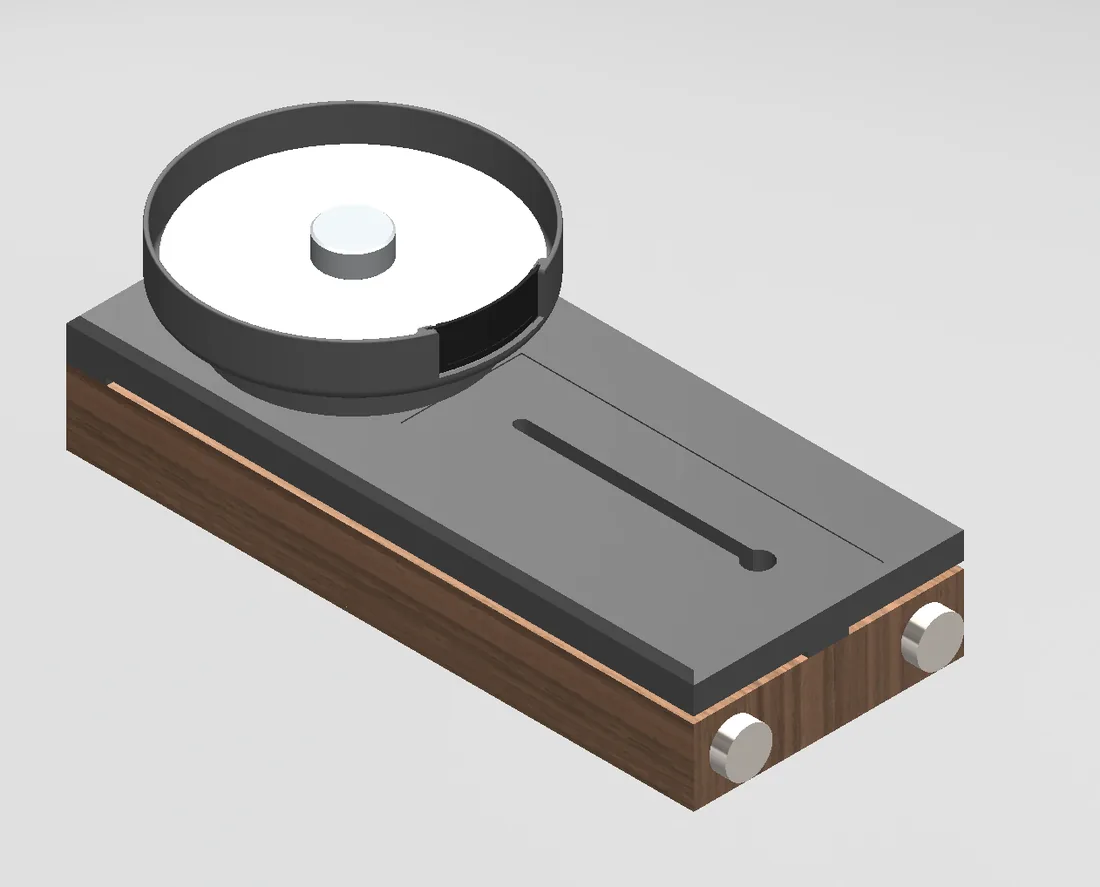 Hover to look inside
Tap to look inside
What's inside
Everything a cut depends on — runout, rigidity, steady speed — is solved in the metal, not hidden behind a cover.
A frameless torque motor sits right on the shaft. No belt to stretch, no pulley to wobble, nothing to slip at low speed.
Three precision angular-contact bearings with light preload, factory-greased for life. The shaft and housing are bearing steel.
A 25 mm 6082 aluminium plate, hard-anodized, with a ground pad that guides the quadrant mast. It rests on three hard points, so the wood can't twist it.
The mast slides in a through slot 125–300 mm from the spindle axis. Move it for a bigger lap and the zero stays put.
An open-source VESC controller with a shaft encoder holds 50–2000 rpm under load and reverses with one switch.
An ABS bowl for laps up to 8″ with a sloped floor and a G1/4 drain. Water never touches the case, so the wood stays dry.
How it works
One centre clamp holds 150 mm, 6″ or 8″ laps on a flat platform. Spacers keep the lap face at the same height.
Slide the mast to the lap size, set angle and index on the quadrant. The ground plate keeps the setting when you move it.
Dial the speed from 2000 rpm for cutting down to 50 rpm for polishing, reverse when the facet asks for it.
Gallery
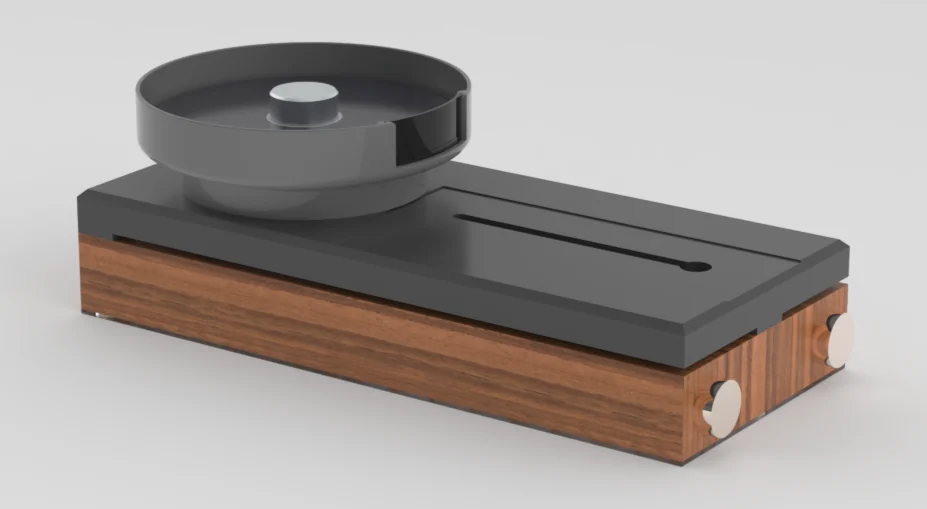
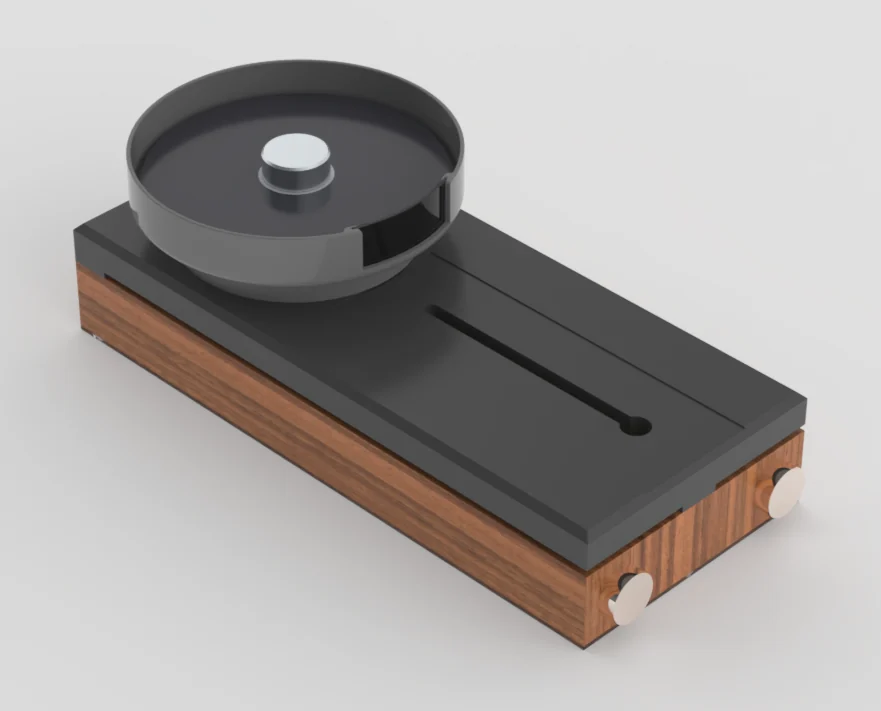
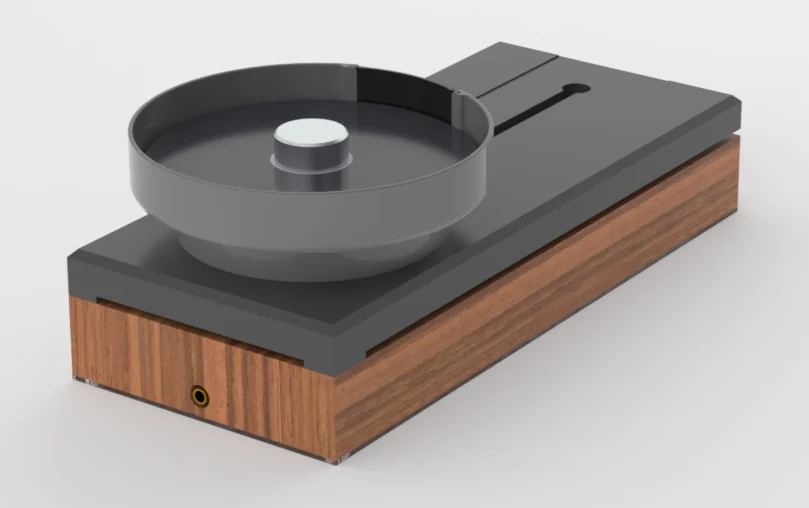
Renders from the CAD model. Knobs in titanium damascus are coming.
Specifications
Design values of the current model. Final figures come with the first machines and their test reports.
We will write when the first machines are tested and ready to order. No spam, one letter at a time.
Write to usContact address coming soon.